

What is colour temperature?
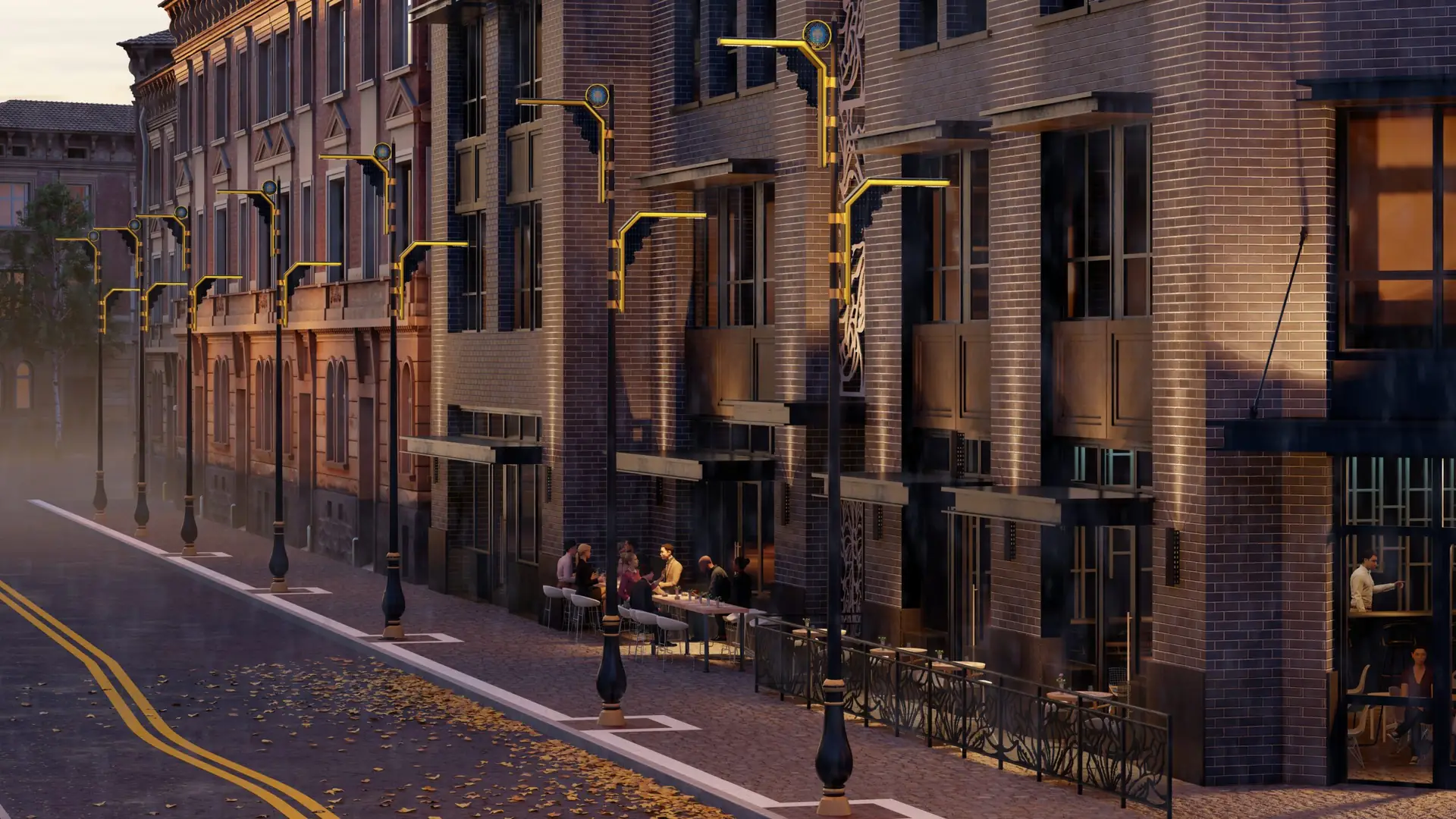
Colour temperature is expressed in kelvin (K) and describes the colour of light. Low values mean yellow-orange (warm) light, high values bluish-white (cool) light. Colour temperature indicates not how strong the light is, but what tone it has.
Which tone for which area?
| Tone | Colour temperature | Recommended areas |
|---|---|---|
| Amber | approx. 1800–2200 K | Coastal areas, natural habitats, historic sites; reduces light pollution and the attraction of insects to light |
| Warm white | 2700–3000 K | Historic settings, parks, footpaths, residential areas; easy on the eyes, gives architecture a warm appearance |
| Neutral white | 4000 K | Streets, boulevards, squares; shows colours naturally and faces clearly |
| Cool white | 5000–5700 K | Car parks, industrial and security areas; provides high contrast |
The trend in cities: warmer light
Many cities are moving towards 3000 K and below in residential areas. Warm light emits less blue light into the night sky, causes less disturbance to people and other living things, and shows historic settings to better effect. On main roads, however, 4000 K continues to be preferred for visual clarity.
Colour rendering (CRI)
CRI (Ra) expresses, on a scale of 0–100, how accurately light shows the colours of objects. Ra 70 and above is common outdoors; in squares, markets and in front of shop windows, Ra 80 and above makes colours appear more vivid.
RGB and coloured lighting
RGB LED body lighting turns the pole itself into a design element. Scenarios can be programmed, such as red on public holidays and commemoration days, or the institution's colour on special occasions. While the main luminaire providing the road lighting remains white, the body lighting gives the city an identity.
Using the light colour selector on our home page and on the product pages of selected solar pole models (for example OZS1601), you can see how the same pole looks in different colours.
Project calculator Free
Calculate right away how many poles your project needs.